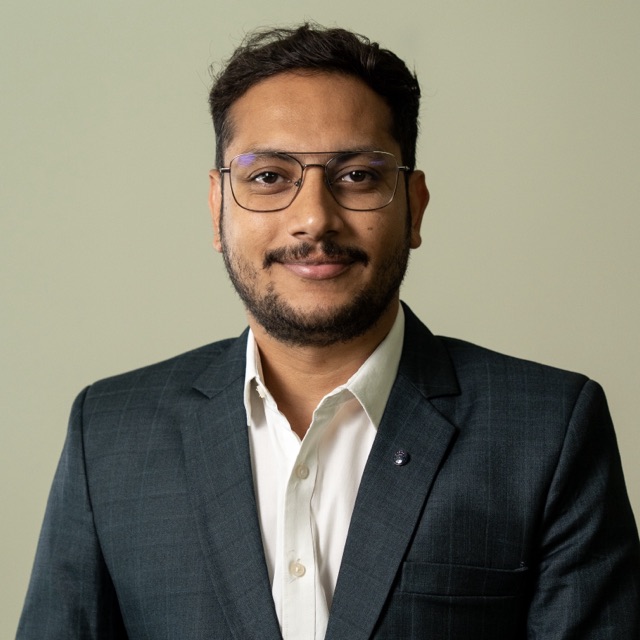
Kunal Singh // Technical AI Governance Researcher
Hi, I'm an AI researcher working with
Stephen Casper.
I recently completed MATS 10, where I gave a spotlight talk, and I'm now continuing
with the MATS Extension in Berkeley.
My interests include AI strategy, risk modelling, evaluations, and technical AI
governance. I'm highly agentic, enjoy taking ownership, and thrive in fast-paced
environments.
I have also organized AI safety talks, networking events, and community gatherings
in India. I enjoy critical thinking, solving complex problems, working through
ambiguity, and turning ideas into concrete projects.
research
A reading and analysis site for a primary-source audit of United States legislation, executive actions, litigation and export controls that target frontier AI developers. The site presents 68 entries across fifteen sections: enacted state frontier laws, pending, stalled and failed state bills, state auditor and verification measures, federal bills and discussion drafts, executive orders and directives, litigation and enforcement, the compute and export-control layer, precursors and legislative history, adjacent laws, a documented list of exclusions, cross-cutting comparisons, and the completeness methodology.
This study examines whether publicly reported evaluations of frontier AI systems lead to documented action. We screened more than 6,600 publications from 46 government and independent evaluation organisations, identifying 1,146 findings across 457 reports. We traced company responses, policy uptake, and public coverage; among 190 significant-risk findings concerning named systems or developers, 152 (80%) lacked a publicly documented company response meeting the study's proportionality standard. We also compare the frontier-AI evaluation ecosystem with oversight arrangements in pharmaceuticals, nuclear safety, transportation, finance, and related sectors. Based on this comparison, the paper proposes stronger mechanisms for evaluation access, response, remediation, independent verification, escalation, and continuing follow-up.
A neutral, sourced map of 155 US organisations that have recently evaluated frontier or general-purpose AI systems built by someone else — non-profits, companies, national laboratories (FFRDCs and UARCs) and government bodies such as CAISSI and NNSA. For each organisation the map records its institutional form, what it assessed (property, method and domain), a recent evaluation publication with who conducted, issued and paid for it, and its funding and relationships with AI developers, each linked to its own source. Every entry rests on public primary records and was checked independently. The map describes rather than ranks: inclusion is not an endorsement.
Tracks real-world incidents where AI systems went wrong: agents acting outside their intended limits, and people misusing AI tools. Each incident is backed by cited sources, such as company disclosures, government statements and independent reports. The site loads live from a Google Sheet, so edits to the sheet appear without changing any code. A timeline shows how incidents have surged in recent months, and the table can be searched and filtered by company and category.
RED30 — 30 universal AI red-line indicators across 4 risk categories, built by analyzing 16 frontier models and mapping EU/global regulatory frameworks onto operational safety criteria.
A coordination hub connecting India's AI safety researchers, organizations, and policy practitioners — building community infrastructure and adapting global AI safety frameworks to India's policy context.
education
Master of Computer Applications
2022 – 2024
Savitribai Phule Pune University · AI, ML, Deep Learning, Data Science
Bachelor of Science — Physics
2018 – 2022
Savitribai Phule Pune University · Astrophysics, Electrodynamics, Quantum Physics